Having driven the width of China, we’ve gained a new perspective on the country.
The people are extremely nice and welcoming. We did not encounter any hostility about being from the USA and people went out of their way to be helpful. Until reaching the western regions, the population seems very homogenous: Han Chinese. In the western region, there are different groups and more obvious ethnic differences (more below). Upon crossing into Kazakhstan, there is clearly much more ethnic diversity with Slavic and Asian traits in the population. We have not seen a single black person during our entire trip to date.
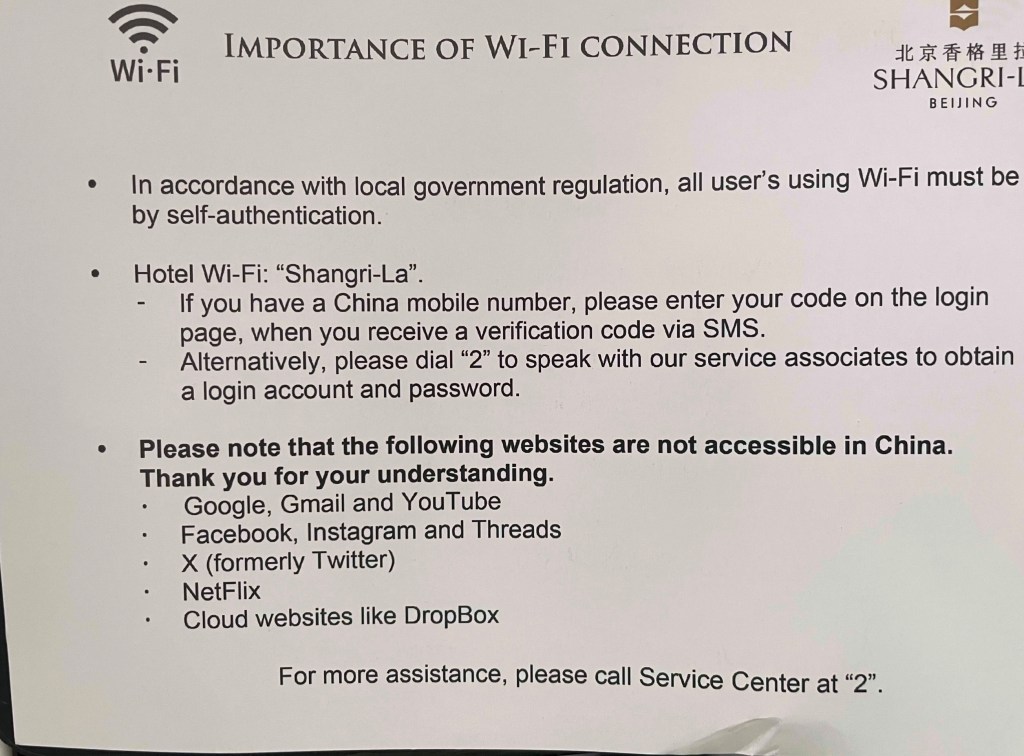
Security and monitoring is very obvious throughout the country, increasing in the western regions. We drove through hundreds, if not thousands, of cameras on highways and streets; every toll booth took down our license number; to visit Tianamen Square, we had to show our passports 4 times at different security checks; to get gasoline in western China, we had to show passports, sign forms and be admitted through a security gate. Internet access is tightly regulated: no access to Google, YouTube, Gmail, western press outlets such as the New York Times. Many of the hotels had WiFi mapped specifically to the hotel room, leading the more paranoid among us to question whether our internet usage was being monitored. VPNs would not work on any hotel network that we were at during our transit.
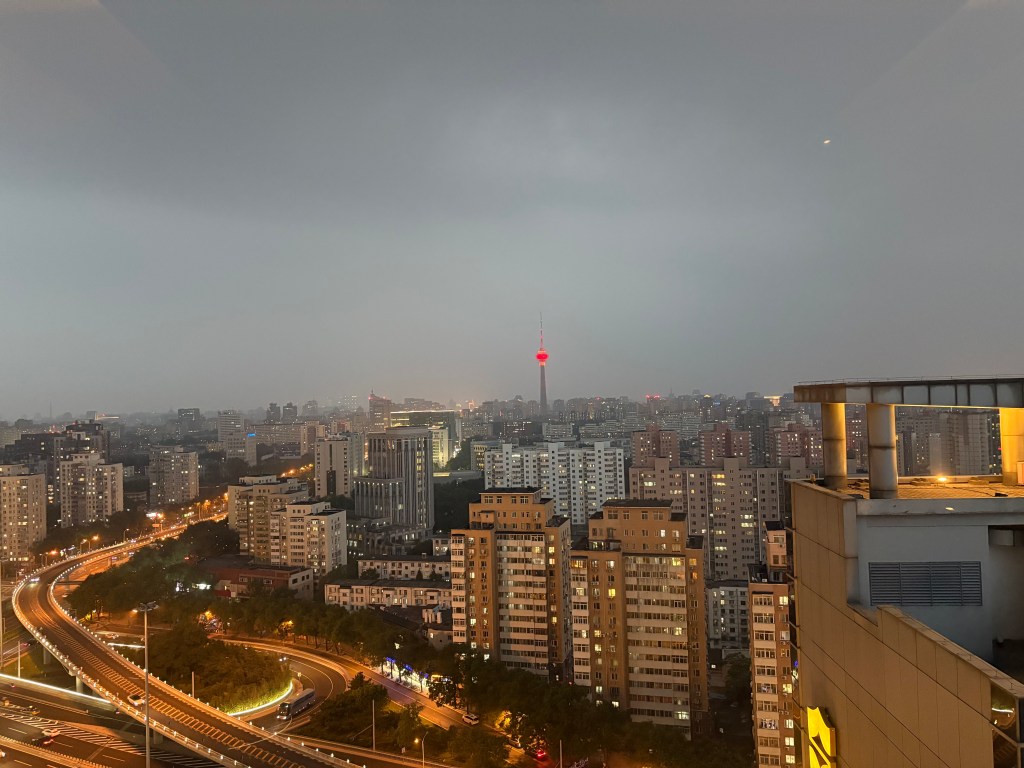
The nation has made a tremendous investment in infrastructure. This seems to be part of their Belt and Road Initiative. The major cities, all of which have populations numbering in the millions, are dominated by high rise apartment and office buildings. As impressive as the cities are, many of the small rural villages look like they are deserted or dying, with many empty buildings and most of the people seem much older. Like the US, it seems that the young people are moving to the cities. The major highways are well maintained, although the secondary roads much less so. When I was here in 1995, the ‘traffic jams’ were bicycles with very few cars. Now there are cars and serious rush hour traffic in the cities. A lot of Chinese cars (BYD) but also Audi, Volkswagen, Mercedes Benz and the occasional Jaguar or Porsche. A lot of scooters, which are all mandated to be electric within the next 5 years. No old cars, apparently you are not allowed to own a car that is more than 15 or 20 years old. A lot of large, large trucks on the highway. All of them are the same color red. We say double decker cow trailers, auto carriers with the top deck being two cars wide and huge trailers carrying rotors for windmills. We actually had to leave the paved road and drive on a parallel gravel/dirt road to get around one. There is cell coverage throughout most of the country except for the remote desert and everyone has a cell phone. They have made a big commitment to renewable energy sources. We passed on solar panel field that was at least 10 km X 4 km in size and there are huge windmills throughout the country. According to GPT Chat, 35% of China’s electricity comes from solar and wind. Talking with prior Peking to Paris participants, things have advanced dramatically since the rally in 2019. It is hard to escape the conclusion that they are catching up quickly and in terms of solar and wind power, passing much of the world.
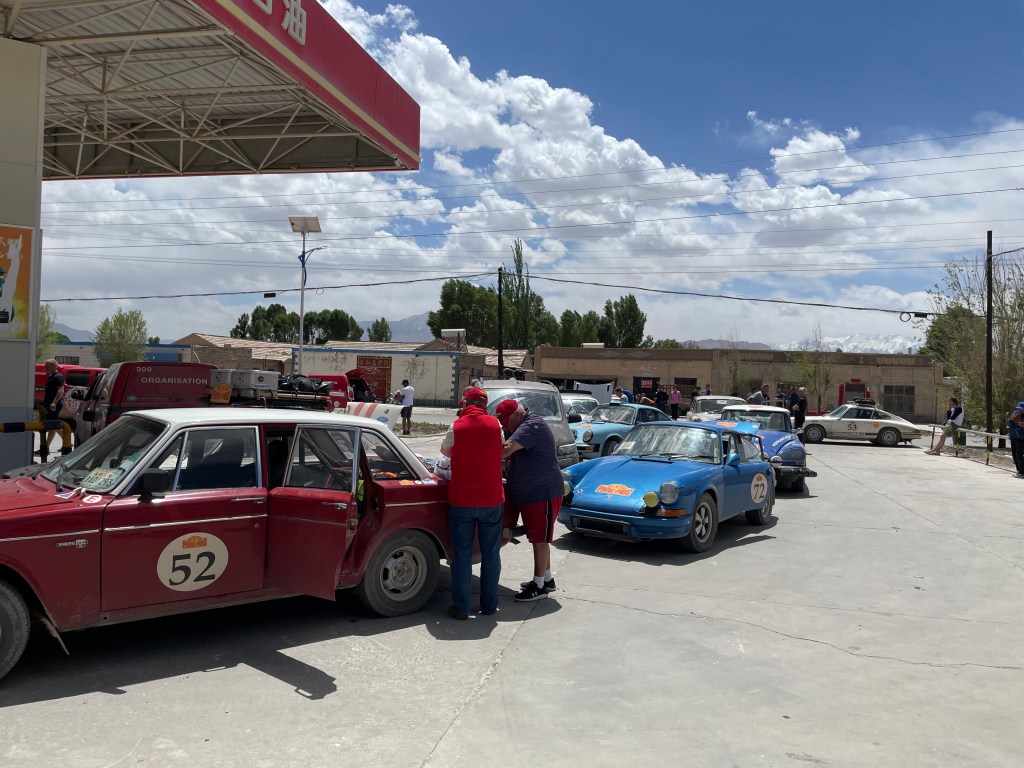
Buying gas in China is interesting. The grades vary widely in ethanol content. There is no self serve at Chinese stations and they often have only one attendant. This has led to some long lines in small towns when 50+ rally cars roll in and we all want 95 octane from the one pump that has it.
AliPay, a Chinese app, was billed as the way to pay for everything in China. In our experience, it worked most, but certainly not all, of the time. This led to “AliPay Roulette”. One of us would try to pay, it would get declined by our bank card, then the other would try. Some times it worked, some times it didn’t. I called the Chase international number to try to improve our success rate. The first rep with whom I spoke didn’t know what AliPay was. The security representative that was next did not know whether Azerbaijan was a country or not. Things got a little better after that but still a bit dicey. They don’t take conventional credit cards and often had difficulty making change for cash payments because almost no one pays cash. Everyone uses AliPay or WeChat.
Google translate works really well. Amaps, a mapping app, works well. You can only get Google maps via cell data and a VPN.
 Reilly Traveling Circus
Leave a comment